University scholarships
Local scholarships at five Egyptian universities ran alongside MBA scholarships for women, STEM undergraduate scholarships for young women, Fulbright scholarships and postgraduate studies for civil servants.
Concept · Review · Page 98
Higher Education Initiative (HEI)
Egypt · Programs & services
The completed U.S.-Egypt Higher Education Initiative supported university study, skills development and career preparation for Egyptian students from underserved communities.
This program has ended.
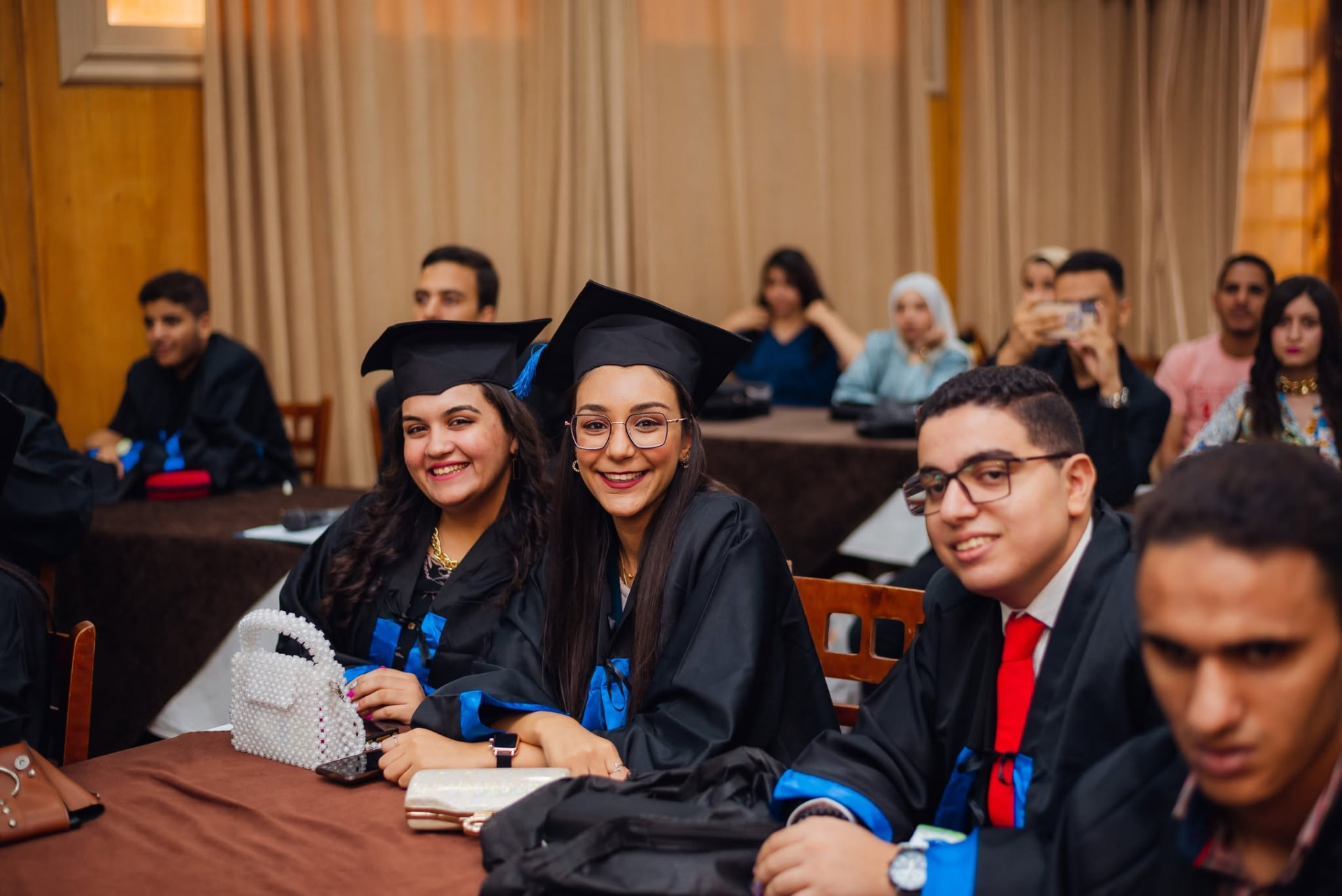
The Public University Scholarships program selected 673 students in five cohorts between 2015 and 2019. No additional students will be selected. The information below records the program’s approach, support and outcomes.
Local scholarships at five Egyptian universities ran alongside MBA scholarships for women, STEM undergraduate scholarships for young women, Fulbright scholarships and postgraduate studies for civil servants.
Public University Scholars received tuition and academic support, English and study skills, leadership and business training, mentoring, internships, community projects and job-search support.
The published scholarship covered books, a laptop, accommodation and meals where needed, and annual transport between home and university. Selected students participated in semester or summer study abroad.
The U.S.-Egypt Higher Education Initiative is an investment in Egypt’s future that provides educational opportunities for high-achieving Egyptians to acquire skills that will better meet the needs of the 21st-century economy. The Initiative encourages partnerships between Egyptian and American universities for knowledge transfer, research, and joint degree programs that reflect the needs of the modern economy in critical disciplines such as agribusiness, engineering, and entrepreneurship. It provides scholarships for talented young Egyptians - women and men from underserved communities in rural and urban areas - to Egyptian and American universities in fields that will help them reach their aspirations and contribute to Egypt’s economic prosperity.
The Public University Scholarships is one of the components of the U.S.-Egypt Higher Education Initiative. The program awards scholarships to over 600 Thanaweyya Amma graduates over five years (high school graduates in 2015, 2016, 2017, 2018, 2019) to study in the excellence sections in one of the top public universities in Egypt: Cairo, Ain Shams, Alexandria, Mansoura, and Assuit. The program recipients will also receive additional beneficial trainings and participate in other activities throughout the years of their study.
The excellence sections are fee-based sections at Egyptian public universities in which the language of instruction is English. The program is collaborating with excellence programs in five universities , Cairo, Mansoura, Alexandria, Assiut, and Ain Shams Universities.
Egyptian students who graduated from public schools with score of 85% or more in their third year of Thanwya Amma and who have been nominated through the Tansiq office of the faculties and universities listed below. The scholarship is also for students with special needs.
Ain Shams University: Faculties (Engineering), (Computer Science), (Commerce)
Alexandria University: Faculties (Science; Only IMAC and Computer and Media Science Departments), (Agriculture), and (Commerce; exclusively for visually impaired students)
Assuit University: Faculties (Engineering), (Computer Science), (Science; only Industrial Chemistry)
Cairo University: Faculties (Engineering, Economics, Mass Communication)
Mansoura University: Faculties (Engineering), (Computer Science), (Science; only Biotechnology)
You must be placed by the Tansiq office in one of the mentioned faculties/universities at the time of application (by August 16) to be eligible for the scholarship.
673 awards were made between 2015 and 2019.
Only the top 65% of scholarship students will study abroad in the United States.
Yes, the scholarship will cover the transportation between home and university once per year.
Yes, the scholarship covers the cost of accommodation and meals in university hostels or other comparable housing for students who are unable to live near campus with family members.
The enhancement, leadership, community work and other activities are intensive and will take up most of your summer and midyear holidays for at least the first two years.
The program students are expected to participate in all program activities.
You will obtain your bachelor's degree in your field of study from the public university you attended. You will also receive a certificate for the enhancement program you attended (including the English course, the leadership training etc.). You may also receive certificates or letters from the companies you interned with and the NGO where you completed your project. For those studying abroad in the United States, you will receive a transcript of your studies at the university.
Your degree will be accepted as any other Egyptian university degree. The program will prepare you through training, summer internships, and linkages with businesses to acquire required skills for employment.
Yes, you can. You can also use the computers at the listed faculties/universities.
Note that incomplete applications will not be taken into consideration, so please make sure you complete your application before submitting.
No English score is needed to apply to the scholarship and English ability is not a requirement for selection. However, since the scholarship’s academic and supplemental courses are in English, you should be prepared to work hard to study and improve your English while on the scholarship. Amideast will provide finalists with English training courses. (The faculty of Mass Communication is the only exception; they have a required English test that students will have to pass to join the excellence program.)
A key priority for the U.S.-Egypt Higher Education Initiative (HEI) Public University Scholarships program and Amideast is providing equitable access to higher education and promoting the inclusion of students with disabilities. We do this through:
Seven percentof the 673 scholarships awarded are toyoung men and women with disabilities. These students met university and scholarship selection criteria and participate fully in all scholarship components. Amideast provides the students with assistive technology, and the university faculties provide the students’ needed accommodations, with support from Amideast when necessary. Ten of our visually impaired students are funded by the Egyptian Housing and Development Bank. As with all scholarship students, the goal is employment. Our first graduate with a disability was employed within 6 months. As more students graduate, we look forward to more successes.
By drawing attention to our students’ capabilities, and cooperating closely with the universities, our visually impaired students were the first to be accepted to study in the Faculty of Commerce special programs in Egyptian public universities (Alexandria University and Mansoura University). One of our students was also the first visually impaired student to be accepted to the Faculty of Mass Communication English section at Cairo University.
The disability centers support students with disabilities by:
The centers work closely with university leadership, faculty representatives, and existing units that support students with disabilities, and have the support of the Ministry of Higher Education and Scientific Research. Each university selected a central location and work on renovating it according to Egyptian and international accessibility standards.
Building on that, the universities select staff for the centers, who received training in disability services, accessibility, and center management through a Study Tour in the U.S. and training in Egypt.
The Mentoring Program is a key component in developing students’ understanding of the business world and the sector they would like to work in, developing their networking ability, and building the necessary personal attitudes and characteristics for a successful career and life. The mentoring provided by engaged professionals can be tied in to all the scholarship’s activities including academics, English language practice, character development, career planning, and internships. The goal is that by supporting our students holistically, students will achieve not only academic excellence, but also career success, with the skills, competencies, and connections to support them along their career path.
Research shows that mentoring improves student achievement, and can have life-changing impacts. Volunteering is also known to enhance psychological and behavioral well-being for the volunteer. As a mentor, you will develop an ongoing individual relationship with an HEI scholarship student to support their adjustment to university life, coursework management, and career planning. No previous mentoring experience is required.
Mentors will meet with their mentees regularly for 9 months (1 hour per month) during the academic year – end of September to mid June. The location of the meeting is decided by you and your mentee (in person, phone, online, etc.)
We would like to thank all of our corporate partners and volunteers who, through their engagement with the HEI Public University Scholarship program, motivate Egyptian youth, support universities, and help to bridge the gap between university and employment.
Key to the success of our scholarship students is their regular connection with employed individuals and companies who can engage, inspire, and motivate, providing students with a wider and deeper understanding of the world and their role in it, as the students work towards achievement in their future careers.
===========
The Technical Advisory Group (TAG) includes representatives of the Egyptian partner universities and companies operating in Egypt who, together, explore ways the private sector and public universities can bridge the gap between them through this scholarship program. Partner companies include:
Interview panelists were trained to evaluate candidates using a rubric. Guest speakers shared technical expertise, career experience and personal-development topics with student groups.
Companies hosted tours and staff discussions. Mentors supported university adjustment, studies and career planning through an ongoing individual relationship.
Companies sponsored career and leadership events and developed partnerships intended to connect public universities with private-sector needs.
The bank supported ten visually impaired students studying law and commerce, with tuition, housing, meals, books, a stipend, advising and career-preparation activities.
The organization supported recruitment, screening, selection and community-service projects, and served on the Technical Advisory Group.
The organization conducted assessment camps during selection and leadership camps for scholarship students.
Ahmed Rezk Ahmed is a smart and talented young man who has never let his challenges define him or hold him back. Losing his father when he was three years old, and raised along with six siblings by his mother in a one-bedroom house in Sohag, he learned the value of hard work, education, passion, and helping others. Now a scholarship recipient in the second cohort of the U.S.-Egypt Higher Education Initiative Public University Scholarships program, Ahmed is taking full advantage of the opportunity.
Although his mother was unable to financially support the family on her own, her emotional support motivated Ahmed. Moreover, her dependence on charity inspired in him a spirit of giving. Her continual motivation of her children to reach for new opportunities through education helped him earn 98 percent on the Thanaweyya Amma high school exit exam. As his mother always told him, “You can reach others’ level through education, not just money.”
Considered an orphan in Egypt because he is without a father and cannot be supported by his mother alone, Ahmed grew to spend a lot of time helping other orphans, since he understood their circumstances. He volunteered in clothing drives for orphans, as well as in competitions for students to memorize the Holy Quran. As a youth, in addition to his studies, he also spent time cultivating many other talents and interests, including drawing, carving pharaonic statues, and writing poetry and novels.
Now at Mansoura University, where he will begin his academic studies in September under the scholarship in the elite biomedical engineering credit-hour program, Ahmed is enjoying his pre-academic English and orientation trainings. He also appreciates living in the dormitory, where he has his own bedroom and three daily meals. Not least, he looks forward to identifying his service activities in Mansoura and completing his required summer community service project.
Ahmed dreams of becoming a pioneer in biomedical engineering , using his inventions and developments to benefit his country. His high school teachers told him that they expect him to become the next Ahmed Zewail , the first Egyptian and the first Arab to receive a science Nobel Prize. Ahmed hopes that, with his determination and the help of this scholarship, they are right.
In a family of five children, Mariana Wassef Boutros grew up on an isolated island in the Nile, in which the only transportation is small boats, requiring two connections to reach Aswan. Her father, a day laborer and her mother, a housewife, had always believed in Mariana’s potential, and throughout her studies she stood out, in 2015 becoming the only girl in her village to graduate from high school.
This summer, Mariana’s high Thanweyya Amma score, vision for her future and the future of Egypt, and her hard work and commitment earned her a place in the competitive Higher Education Initiative Public University Scholarships program.
Following a dream she first visualized when she was young, Mariana is now studying to become a nurse, out of her belief in the importance of the role of nursing for medical care in Egypt. Now in her first year in the nursing excellence program at Cairo University, Mariana is doing well and is more committed to her dream than ever. Despite that her parents miss her as she studies so far from home, Mr. Wassef Boutros is thrilled for his daughter’s chance to create her future, something she couldn’t have dreamed of without the HEI Public University Scholarships program.
Mehad Abd El Kreem Mohamed is a strong and happy young woman who faces challenges with confidence and determination , traits that have already led her to multiple successes in her 18 years. Most recently, Mehad has been selected to join the competitive U.S.-Egypt Higher Education Initiative Public University Scholarships program. Mehad is now attending a pre-academic program provided by Amideast, before enrolling in the gas and petrochemical engineering excellence program at Alexandria University. Looking further into the future, she envisions an MBA and finding a way to benefit Egypt through her work, but for now she is focusing on her studies.
Math and engineering have been a passion and a strength of Mehad’s for as long as she can remember. But it is the association of these things with her father that she most values. Her father, who had worked in the traffic department and as an accountant, inspired her love of math and engineering. Mehad’s father passed away when she was only eight years old, leaving her mother, older sister, and younger brother to live on his pension. Mehad’s mother now works as an employee in a supply office and is very supportive of Mehad , encouraging her to reach for her dreams.
Though only in primary school when her father passed away, it was at this point that Mehad committed herself to fulfilling both her dream and her father’s dream of her becoming an engineer. Studying in the math section of her high school in Kafr El Sheikh, a city in northern Egypt about an hour from Alexandria, Mehad exceled. She earned 97.3 percent on the Thanaweyya Amma high school leaving exam, ranking her third in her school and 17th in her governorate of over three million people. One of Mehad’s happiest memories is of that day , knowing she could study engineering in university and feeling the pride and joy from her family.
In addition to her regular schoolwork and studying for the Thanaweyya Amma, Mehad , always looking for an opportunity to develop herself , participated in the two-year-long English Access Microscholarship Program for disadvantaged high school students, which gave her additional English and personal development training. At the Access graduation, Mehad took the stage to read a poem composed by the group, in front of the U.S. ambassador, who was in attendance. She had participated in several poetry competitions in school and was known to be talented at reading poetry, but she was nonetheless intimidated.
One day…his brain started to breathe again
When he heard “just speak and no fears of mistakes”
It was an order from his inner peace
To take every day a piece
To fulfill his deeds
To feel his success
And to have his access.
As she read this last section out loud, and felt the applause afterwards, she knew that she could do anything.
Soad Abu El Hassan Mohamed has two passions , biotechnology and educating others. Her belief in the power of education began early, while her love of biotechnology is relatively new; she began her first year of university last year as part of the competitive U.S.-Egypt Higher Education Initiative Public University Scholarships program. But, as she grows, her twin interests in biotechnology and education will intersect more and more , as she succeeds in her university program, motivates other young women to study agriculture biotechnology, and works toward her future goal of becoming a professor and researcher in agriculture biotechnology.
Originally from Hurghada on the Red Sea, five hours by car from her university, Soad is the oldest of six siblings, with four brothers and one sister. Her father works two jobs to support the family , as a plumber outside their home governorate and in the governor general’s office in Hurghada , while her mother takes care of the family at home. Soad admires her parents, who have always motivated and supported her educational goals, despite their illiteracy.
Since the eighth grade, recognizing challenges in the public school system and feeling an obligation to the education of her community and country, Soad has spent two to four hours per week teaching children Arabic and English in her home, free of charge. She finds the activity rewarding and plans to continue teaching during vacations when she is home.
In high school, Soad studied in the science track and began to examine possible science fields for university study and a career. Biotechnology in agriculture piqued her interest and through the scholarship, she was able to enroll in the agriculture biotechnology program at Ain Shams University , a program she wouldn’t have been able to afford otherwise. Now having finished her first year, she is in the top five of her class, with a grade point average of 3.9 out of 4.
The scholarship’s enhancement activities have also helped Soad to become more independent and confident, and her example has motivated four young women in the second scholarship cohort to also study agriculture , a field that has great potential in Egypt but which few youth currently enter. Soad dreams of pursuing her postgraduate studies in biotechnology abroad , conducting research, inventing techniques, and creating medicines from plants and animals , ultimately helping to educate other students by becoming a professor of agriculture.